In modern infrastructure, durability is no longer judged only by how much weight a cover can bear on the day it is installed. Engineers, contractors, and municipal buyers are paying closer attention to how materials perform after years of exposure to water, chemicals, salt, sunlight, temperature shifts, and daily traffic. This is exactly why the FRP Manhole Cover has gained wider recognition across industrial, municipal, commercial, and utility applications. Unlike conventional materials that may gradually rust, crack, or degrade in aggressive environments, fiberglass reinforced plastic offers a different performance profile—one built around corrosion resistance, dimensional stability, lower maintenance needs, and reliable long-term service. When infrastructure owners compare total lifecycle value rather than only initial purchase cost, FRP manhole covers often stand out as a practical and technically sound option for projects where long-term durability matters as much as immediate strength.
Why Corrosion Resistance Matters in Underground Infrastructure
Manhole covers operate in some of the harshest service conditions in any built environment. They are exposed to standing water, wastewater gases, de-icing salts, acid or alkaline residues, industrial runoff, and coastal humidity. In many regions, these factors work together and steadily attack traditional materials.
Metal covers, especially in chemically aggressive or humid areas, may corrode over time. Concrete units can also deteriorate as moisture penetrates, freeze-thaw cycles expand internal cracks, and chemical attack weakens the structure. Once material degradation begins, safety risks and maintenance costs often follow.
A corrosion resistant manhole cover helps reduce several common problems:
· surface degradation and structural weakening
· sticking or seizure caused by rust
· increased replacement frequency
· costly inspections and repairs
· reduced reliability in critical access points
For long-life infrastructure planning, resistance to corrosion is not a secondary feature. It is one of the key performance requirements.
What Makes an FRP Manhole Cover Different
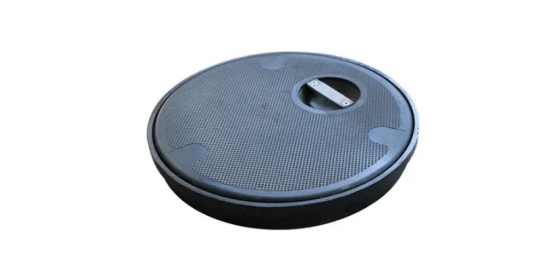
An FRP Manhole Cover is made from fiberglass reinforcement combined with a polymer resin matrix. This composite structure provides a balance of strength, stiffness, and environmental resistance that differs significantly from cast iron or conventional concrete.
Material composition
Fiberglass contributes mechanical strength, while the resin system helps protect the structure against moisture and chemical attack. Different resin formulations can be selected depending on the intended application, such as wastewater systems, telecom chambers, drainage lines, or chemical processing areas.
Structural advantages
Because FRP is a composite material, it is not vulnerable to rust in the same way metal is. It also offers a favorable strength-to-weight ratio, making the cover easier to handle during installation and maintenance operations.
Performance beyond weight reduction
Light weight is often the first advantage people mention, but the more meaningful benefit is consistency over time. A durable composite manhole cover is designed to maintain performance under repeated exposure rather than simply surviving a short initial test period.
How FRP Resists Corrosion in Real-World Conditions
Corrosion resistance in FRP comes from both its non-metallic nature and its engineered surface properties. Instead of oxidizing like iron-based materials, properly manufactured FRP acts as a barrier against many moisture- and chemical-related failure mechanisms.
In practical use, this matters in environments such as:
· wastewater networks, where hydrogen sulfide and other corrosive gases are present
· coastal zones, where salt-laden air accelerates metal deterioration
· chemical plants, where acids, alkalis, or process residues may contact the cover
· stormwater systems, where prolonged moisture exposure is common
· food and pharmaceutical facilities, where hygiene and resistance to cleaning chemicals are important
The result is not simply a cleaner appearance. It is a more stable product with lower risk of corrosion-driven weakening, reduced seizure around frames, and more predictable service life.
Long-Term Durability Is More Than Just Strength
Many buyers still evaluate manhole covers mainly by load class, but long-term durability involves several performance dimensions working together.
Mechanical fatigue resistance
A cover may meet load requirements once, yet still perform poorly after thousands of repeated traffic cycles. FRP systems engineered correctly can handle recurring stress while maintaining structural integrity.
Weathering stability
Outdoor infrastructure faces heat, UV exposure, rain, and temperature variation. A well-designed lightweight manhole cover should resist warping, brittleness, and excessive surface aging over time.
Dimensional consistency
A good cover must continue to fit securely within its frame. Excess deformation, swelling, or damage can lead to rattling, instability, or unsafe access conditions. FRP products with controlled manufacturing quality are often more dimensionally stable than buyers expect.
Impact resistance
In real operating conditions, covers may be dropped during maintenance or struck during service work. Long-term durability includes the ability to tolerate these occasional impacts without immediate failure.
Comparing FRP With Traditional Materials
The table below helps illustrate why FRP is increasingly selected for corrosion-sensitive applications.
Performance Factor | FRP Manhole Cover | Cast Iron Cover | Concrete Cover |
Corrosion resistance | Excellent in many aggressive environments | Vulnerable to rust and corrosion | Can degrade under moisture and chemicals |
Weight | Light to moderate | Heavy | Very heavy |
Handling efficiency | Easier installation and removal | Requires more labor | Difficult to move and install |
Theft value | Low scrap value | High scrap value | Low |
Chemical resistance | Strong when matched with correct resin | Limited | Moderate to limited |
Maintenance demand | Generally low | Moderate to high in corrosive settings | Moderate |
Long-term appearance | More stable in wet/corrosive areas | Surface rust common | Surface wear and cracking possible |
This comparison does not mean every FRP cover is automatically superior in every situation. Design quality, manufacturing process, resin selection, and correct load rating still matter. However, in environments where corrosion is one of the primary failure risks, FRP offers clear advantages.
Lifecycle Cost Often Tells the Real Story
A lower upfront cost does not always lead to the lowest total cost. This is especially true in infrastructure systems that are expected to remain in service for many years.
When evaluating lifecycle value, project owners should look beyond the initial purchase price and consider:
1. installation labor
2. transport and handling costs
3. maintenance frequency
4. replacement cycles
5. downtime during repair or changeout
6. safety risks related to degraded covers
A long service life manhole cover can reduce hidden costs that are not obvious during procurement. Because FRP is lighter, crews can often install and remove covers more efficiently. Because it resists corrosion, maintenance intervals may be extended in demanding environments. Because it has low scrap value, theft risk can also be reduced in some markets.
For municipalities and industrial operators managing dozens or hundreds of access points, these factors can have a meaningful budget impact over time.
Design Factors That Influence Service Life
Not all FRP products are equal. Long-term durability depends heavily on engineering and production quality.
Load class and reinforcement design
The cover must match the traffic and application requirements. Pedestrian zones, green areas, roadsides, and heavy traffic lanes demand different structural designs.
Resin selection
The resin system should be chosen according to the operating environment. Chemical exposure, moisture level, UV conditions, and temperature range all influence long-term performance.
Molding quality
Uniform curing, reinforcement distribution, and dimensional control are critical. Weak manufacturing practices can undermine the theoretical benefits of composite materials.
Surface finish and anti-slip performance
Durability also includes safe day-to-day use. A well-designed surface should retain anti-slip characteristics while resisting wear.
Frame-cover fit
The frame is part of the total system. Even a strong cover may underperform if the seating design is poor or the installation is not precise.
For buyers, this means supplier evaluation is important. Technical data, production capability, testing standards, and application experience all deserve careful review.
A Practical Material Choice for Long Service Life
From our perspective, the growing use of FRP manhole covers reflects a broader change in how infrastructure is evaluated. More buyers now want products that perform reliably year after year, not just materials that look strong at the point of installation. In corrosive, wet, coastal, or industrial environments, the advantages of an FRP Manhole Cover become especially clear: better resistance to chemical attack, lower maintenance pressure, easier handling, and a more predictable service life. At Avatar Composite Co., Ltd., we believe material selection should always begin with real operating conditions and long-term value rather than short-term assumptions. For readers who are comparing options for municipal, industrial, or commercial projects, it may be worthwhile to learn more from Avatar Composite Co., Ltd. and evaluate whether an FRP solution fits the demands of your specific application.
FAQ
1. What is the main advantage of an FRP Manhole Cover over metal covers?
The main advantage is corrosion resistance. An FRP Manhole Cover does not rust like metal, which makes it especially suitable for wastewater systems, coastal areas, and chemical environments.
2. Are FRP manhole covers durable enough for long-term outdoor use?
Yes. When properly designed and manufactured, FRP manhole covers offer strong weather resistance, dimensional stability, and reliable performance under long-term outdoor exposure.
3. Do FRP manhole covers reduce maintenance costs?
In many applications, they do. Because they resist corrosion and are easier to handle, they can lower inspection, repair, and replacement costs over the lifecycle of the installation.
4. Where are FRP manhole covers most commonly used?
They are widely used in drainage systems, sewer networks, telecom chambers, industrial sites, water treatment plants, coastal infrastructure, and commercial utility access areas.


