When buyers first start comparing manhole cover options, they often focus on visible differences such as weight, color, or price. But the real decision is usually more complex. A good FRP Manhole Cover is not simply a lighter substitute for traditional materials. It is a product shaped by resin selection, reinforcement design, load requirements, environmental exposure, and long-term maintenance expectations. That is why engineers, contractors, utility managers, and procurement teams often ask the same practical questions before making a final choice: Is it strong enough? Will it last outdoors? Can it handle chemicals? Is it safer for workers? In this article, we answer the most common questions in a clear and practical way, so readers can understand where FRP manhole covers perform well, where careful specification matters, and how to evaluate them with confidence rather than assumptions.
Why are FRP manhole covers getting more attention?
The growing interest in FRP manhole covers comes from a combination of performance and operational benefits. In many projects, traditional cast iron or concrete covers still work, but they also bring familiar problems: high weight, difficult handling, corrosion, theft risk, and more demanding maintenance. A composite manhole cover offers an alternative that solves several of these issues at once.
For example, lower weight can make installation easier and reduce labor strain. Corrosion resistance helps in wastewater systems, chemical plants, coastal sites, and wet utility environments. Because FRP has little scrap value compared with metal, it is also less attractive to thieves. In settings where safety and lifecycle cost matter more than old material habits, FRP increasingly becomes part of the conversation.
This shift is not only about replacing one material with another. It reflects a broader move toward materials that are easier to manage over time and better suited to modern infrastructure conditions.
What exactly is an FRP manhole cover?
FRP stands for Fiber Reinforced Polymer, sometimes also called fiberglass reinforced plastic. In simple terms, it is a composite material made by combining reinforcing fibers with a polymer resin matrix. The result is a product that can be both strong and relatively lightweight.
The basic material structure
Most FRP manhole covers include:
· Glass fiber reinforcement for strength
· Resin for binding and environmental resistance
· Fillers or additives for surface performance, stiffness, or fire-related properties
· A designed internal structure that improves load distribution
The cover’s performance depends not only on the material ingredients but also on how they are engineered together.
Why this matters to buyers
Two FRP products can look similar but perform very differently. One may be designed for pedestrian use, while another may be engineered for heavy-duty utility or industrial applications. That is why buyers should avoid assuming that all FRP manhole covers are interchangeable. Manufacturing quality, design thickness, ribbing, resin type, and testing standards all play a role in actual performance.
Are FRP manhole covers strong enough for real-world use?
This is probably the most common question, and the answer is yes—provided the product is correctly designed for the intended load. Strength is not determined by weight alone. In fact, one reason FRP surprises many buyers is that a material can be much lighter than cast iron and still perform very well when engineered properly.
Load performance depends on factors such as:
· Cover geometry
· Reinforcement layout
· Resin system
· Support frame design
· Manufacturing consistency
· Compliance with relevant load standards
A properly specified FRP Manhole Cover can serve in walkways, green spaces, commercial areas, utility chambers, and selected traffic-rated applications. However, buyers should always match the load class to the real conditions on site. A lightweight cover is not automatically a heavy-duty cover.
Quick comparison of common cover materials
Feature | FRP Manhole Cover | Cast Iron Cover | Concrete Cover |
Weight | Light to moderate | Heavy | Very heavy |
Corrosion resistance | Excellent | Moderate to poor in harsh environments | Moderate |
Theft risk | Low | High | Low |
Ease of handling | Good | Limited | Limited |
Electrical conductivity | Non-conductive | Conductive | Non-conductive |
Chemical resistance | Good to excellent | Limited in corrosive settings | Variable |
Maintenance burden | Generally low | Moderate | Moderate to high |
The table shows why FRP is often chosen not only for weight reduction, but for a broader balance of properties.
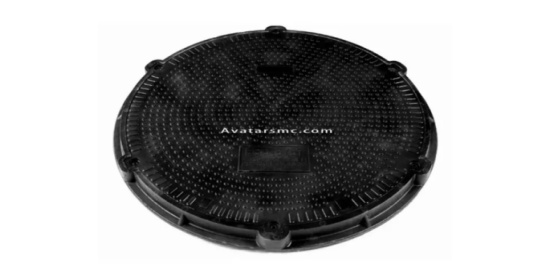
Where are FRP manhole covers commonly used?
One misconception is that FRP covers are only for decorative or light-duty zones. In reality, they are used across a wide range of applications when properly specified.
Common use areas include municipal utilities, telecom chambers, landscaping zones, pedestrian streets, residential developments, wastewater facilities, coastal projects, chemical plants, and industrial service areas. In these environments, resistance to corrosion, moisture, and difficult weather can be just as important as structural capacity.
In landscape and urban design settings, FRP covers can also support cleaner surface integration. Some projects prefer them because they are easier to handle and can be selected in forms that better match surrounding infrastructure. In industrial settings, the value often comes from material resistance and improved safety during access and maintenance.
What safety benefits do FRP manhole covers offer?
Safety is one of the strongest reasons to consider FRP, especially when access covers are opened frequently or located in demanding environments.
First, their lighter weight can reduce manual handling strain. This does not eliminate the need for safe lifting procedures, but it can make routine inspection and access work more manageable. Second, FRP is non-conductive, which may be valuable near electrical infrastructure. Third, it does not spark the way certain metal materials can, which can be relevant in specific industrial environments.
Surface design also matters. Many FRP covers are manufactured with anti-slip textures, improving traction in wet conditions. Another practical benefit is theft deterrence. A stolen cover is not just a material loss; it is a major public safety hazard. Because FRP has lower resale value as scrap, the theft risk is often reduced.
In short, the safety discussion is wider than weight alone. It includes handling, slip resistance, electrical behavior, and site security.
How well do they perform in harsh environments?
Environmental durability is one of the main reasons buyers choose a corrosion resistant manhole cover made from composite materials.
In wet and corrosive settings
FRP performs particularly well in locations where metal covers may rust or degrade over time. Wastewater systems, marine environments, and chemical processing zones often expose infrastructure components to moisture, salts, fumes, or aggressive substances. In these conditions, the right resin system can significantly improve long-term stability.
In sunlight and changing temperatures
Outdoor exposure also raises questions about UV resistance, heat, cold, and expansion behavior. A well-manufactured FRP cover can be designed for exterior use, but product quality matters. Surface finish, additives, and resin selection affect how well the cover resists weathering and retains performance over time.
This is why buyers should ask not only whether a cover is “FRP,” but whether it is designed for the exact service environment. A general-purpose product may not be the same as one built for chemical or coastal exposure.
A practical way to evaluate the right option
The best way to evaluate an FRP cover is to stop asking whether it is “better” in the abstract and start asking whether it is better for a specific use case. That means looking at traffic conditions, worker access frequency, weather exposure, chemical contact, theft concerns, and maintenance capacity together. In many real-world projects, FRP becomes a strong option because it addresses several operational pain points at once rather than excelling in only one category.
From our perspective, this is where a conversation with an experienced manufacturer becomes useful. At Avatar Composite co.,Ltd., we believe the right FRP Manhole Cover should be matched to the actual job, not sold as a one-size-fits-all answer. For readers comparing materials or planning an upcoming utility, industrial, municipal, or landscaping project, it is worth taking a closer look at the technical details behind composite covers and asking practical questions before ordering. If you would like clearer specifications, product guidance, or help comparing options, you can contact Avatar Composite co.,Ltd. to learn more in a straightforward and professional way.
FAQ
1. What is the main advantage of an FRP Manhole Cover over cast iron?
The main advantage is balance. An FRP Manhole Cover combines lower weight with corrosion resistance, reduced theft risk, and easier handling, which can make it more practical in many utility and industrial environments.
2. Is a composite manhole cover suitable for coastal or chemical areas?
Yes, a composite manhole cover is often a strong choice for coastal, wastewater, or chemical environments because it can resist moisture, salts, and corrosive exposure better than many traditional metal options, depending on the resin system used.
3. How do I know if a lightweight manhole cover is strong enough?
You should check the load rating, product test data, frame design, and intended application. A lightweight manhole cover can be very durable, but only when it is engineered for the actual traffic and service conditions on site.
4. How long can a corrosion resistant manhole cover last?
A corrosion resistant manhole cover can provide long service life when it is properly specified, correctly installed, and used in the environment it was designed for. Actual lifespan depends on load, weather, chemicals, and maintenance conditions.


