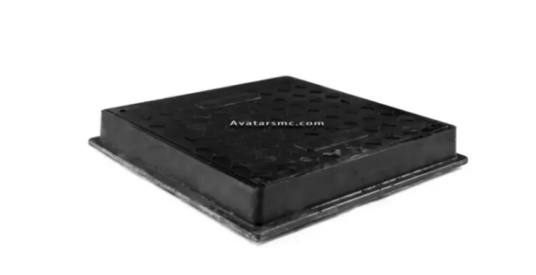
In modern infrastructure work, installation efficiency is no longer a minor technical concern. It directly affects labor planning, site safety, project scheduling, traffic control, and overall construction cost. That is why more contractors, utility planners, and municipal buyers are rethinking one of the most overlooked components on a jobsite: the cover itself. A lightweight FRP Manhole Cover offers a practical advantage from the first moment it arrives on site to the time it is lifted for inspection years later. Compared with traditional metal or concrete alternatives, FRP solutions can reduce handling effort, simplify positioning, shorten installation windows, and improve safety for workers. These benefits are especially important in projects where access is limited, equipment movement is restricted, or frequent maintenance is expected. Rather than treating the manhole cover as a passive finishing product, project teams are increasingly recognizing it as a factor that influences workflow speed and field performance. When the right product is specified, the result is not only a durable access point, but also a smoother and more efficient installation process.
Why Installation Efficiency Matters in Today’s Projects
Installation efficiency affects far more than crew convenience. On active sites, every extra minute spent lifting, aligning, adjusting, or securing materials can create a ripple effect across the schedule. Delays can increase labor costs, extend road closures, interrupt other trades, and raise safety risks.
This is particularly true in sectors such as:
· municipal drainage
· telecom and cable networks
· water treatment facilities
· industrial utilities
· landscaping and public space development
In these environments, access covers are often installed in areas with tight working space, live traffic, pedestrian activity, or sensitive underground systems. A heavy cover may require additional lifting tools, more workers, and stricter handling procedures. A lightweight FRP Manhole Cover, by contrast, can help simplify the entire sequence.
What Makes an FRP Manhole Cover Lightweight
FRP stands for fiber reinforced plastic, a composite material designed to combine strength with reduced mass. This balance is one of the main reasons FRP products are increasingly used in infrastructure applications.
A lightweight manhole cover made from FRP achieves its performance through a combination of design features:
Material composition
Glass fibers provide structural reinforcement, while the resin matrix binds the material together and helps resist corrosion, chemicals, and moisture.
Optimized structural design
Unlike solid concrete or cast metal, FRP products can be engineered with ribbed or reinforced internal structures that maintain load performance without unnecessary weight.
Lower dead load
Because the base material is lighter, the finished cover is easier to transport, move, lift, and reinstall during both initial installation and future maintenance.
This reduced weight does not mean reduced function. A properly designed FRP Manhole Cover can still meet load-bearing requirements while improving field handling.
FRP vs. Traditional Materials at a Glance
The difference becomes easier to understand when comparing FRP with more conventional options.
Feature | FRP Manhole Cover | Cast Iron Cover | Concrete Cover |
Weight | Lightweight | Heavy | Very heavy |
Handling on site | Easier manual handling or light equipment | Often requires more labor or lifting support | Usually requires machinery |
Corrosion resistance | Excellent | Can rust over time | Can degrade in aggressive environments |
Theft value | Low | Higher scrap value | Low |
Installation speed | Faster in many applications | Moderate | Slower |
Maintenance reopening | Easier to remove and replace | More effort required | Often difficult |
Suitability for corrosive areas | High | Moderate to low | Moderate |
This comparison shows why a composite manhole cover installation process often moves more quickly than one based on traditional heavy materials.
Faster Handling on Site Means Faster Progress
The most immediate efficiency benefit of a lightweight FRP Manhole Cover is easier handling during installation. This affects several stages of the workflow.
Delivery and unloading
Lighter covers are simpler to unload from trucks and distribute around the site. In many cases, teams can reduce dependency on forklifts or cranes for smaller or medium-sized units. That can be especially useful on urban projects with limited access or on sites where equipment movement is restricted.
Positioning and alignment
When installers need to place the cover frame accurately over a chamber opening, lower weight makes fine adjustment easier. Instead of stopping to reorganize manpower or fetch additional tools, crews can often complete alignment more smoothly.
Reduced crew strain
Heavy lifting slows down real work. It also contributes to fatigue. When workers spend less physical energy moving a cover, they can focus more effectively on leveling, fitting, sealing, and checking the installation.
Faster reopening for testing
In some projects, chambers need to be reopened during commissioning, inspection, or service verification. A lightweight cover helps reduce the time needed to access the chamber again, which keeps downstream work on schedule.
Safety Improvements Also Support Efficiency
Speed without safety is not real efficiency. One of the reasons lightweight FRP solutions are gaining attention is that they improve both at the same time.
A heavy conventional cover creates several common jobsite risks:
· back strain during lifting
· hand injuries during repositioning
· crush hazards from slipping or dropping
· awkward movement in confined spaces
A lightweight manhole cover helps lower these risks by reducing the force required for handling. Fewer strain-related issues can mean fewer work interruptions, fewer procedural delays, and less need for specialized lifting arrangements.
Safety benefits also extend into long-term maintenance. When future crews can open and close access points with less effort, the structure remains easier to inspect and maintain. That matters for utilities that require routine access.
Less Equipment Dependence in Tight or Remote Areas
Another major advantage of the FRP Manhole Cover is that it can reduce reliance on heavy lifting equipment. This is not just a convenience issue. It can directly influence installation efficiency in the field.
Consider these common site conditions:
Urban roadside projects
In narrow streets or traffic-controlled lanes, bringing in extra lifting equipment adds complexity. A lighter cover can help crews work faster with less disruption.
Landscaped public areas
Parks, footpaths, and decorative paving zones often require minimal ground disturbance. Heavy machinery may damage finished surfaces or create unnecessary reinstatement work.
Remote utility sites
At remote pump stations, agricultural infrastructure points, or off-grid service locations, the ability to install or remove a cover without major equipment is a clear practical benefit.
Indoor or industrial facilities
Inside plants or utility buildings, maneuvering large handling equipment may be difficult. In these cases, a corrosion resistant manhole cover that is also lightweight offers both installation and lifecycle value.
Long-Term Maintenance Efficiency Should Not Be Ignored
Installation is only the beginning of a manhole cover’s working life. A product that is efficient to install but difficult to maintain later may not deliver the best total value.
A well-designed FRP Manhole Cover continues to support efficiency after the initial project phase because it is generally:
· easier to reopen for inspections
· less prone to corrosion-related seizure
· more stable in aggressive environments
· easier to handle during replacement or upgrades
For utility owners, this means the productivity gain is not limited to construction day. It carries forward into maintenance planning, service response, and asset management.
That long-term perspective matters in sectors where chambers are accessed repeatedly, such as electrical networks, drainage systems, wastewater facilities, and telecom infrastructure.
Our View on Practical Installation Efficiency
From our perspective, the real value of a lightweight FRP Manhole Cover is not just that it is easier to carry. It is that the product helps simplify the entire workflow around access infrastructure. It can reduce manual strain, shorten installation time, lower dependence on heavy equipment, and improve long-term maintenance access, all while delivering corrosion resistance and dependable performance in demanding environments. At Avatar Composite co.,Ltd., we see these priorities reflected again and again in municipal, utility, and industrial projects where teams are looking for practical ways to improve site efficiency without sacrificing durability. For buyers who want a solution that supports both installation performance and long-term asset value, it makes sense to evaluate FRP carefully and choose a supplier with the right technical understanding. If readers would like to explore suitable options in more detail, they can contact Avatar Composite co.,Ltd. for further product information and application guidance based on actual project needs.
FAQ
1. Is an FRP Manhole Cover strong enough for demanding applications?
Yes, a properly engineered FRP Manhole Cover can provide high mechanical strength while remaining lighter than traditional materials. The key is to choose the correct load rating for the intended application, such as pedestrian, roadway, or industrial use.
2. Does a lightweight manhole cover always mean lower durability?
No. Lower weight and durability are not opposites. FRP is designed to combine structural reinforcement with corrosion resistance, which can make it highly durable in wet, chemical, or coastal environments when the product is properly specified.
3. Where does composite manhole cover installation bring the biggest efficiency gains?
The biggest gains are often seen in projects with restricted access, limited lifting equipment, frequent maintenance needs, or sites where minimizing labor effort and traffic disruption is important. Urban utility work and industrial environments are common examples.
4. How do I choose the right FRP cover for my project?
Start with the application conditions: load requirement, opening size, exposure environment, security needs, and maintenance frequency. Once these are clear, you can compare specifications and select an FRP Manhole Cover that fits both performance and installation goals.


