Urban infrastructure is under constant pressure to perform better, last longer, and remain safe under increasingly complex conditions. Roads carry heavier traffic, utility systems require faster access, and public works teams are expected to reduce maintenance without compromising reliability. In this environment, material selection becomes more important than ever. One component that often receives less attention than it deserves is the manhole cover. Yet it plays a direct role in public safety, operational access, and long-term maintenance costs. An FRP Manhole Cover is becoming a preferred option in many urban projects because it responds to these demands in a practical way. Compared with conventional materials, it offers a strong balance of durability, corrosion resistance, lightweight handling, and design flexibility, making it highly relevant for modern city construction and utility management.
Why Material Choice Matters in Urban Projects
In urban engineering, even a small component can affect the overall lifecycle performance of a project. Manhole covers are exposed to repeated loading, changing temperatures, moisture, chemicals, and frequent pedestrian or vehicle contact. Traditional covers made from cast iron or concrete have long been used because they are familiar and widely available, but their limitations are becoming more visible in environments where efficiency and durability are priorities.
An FRP Manhole Cover offers a different material approach. FRP, or fiber reinforced polymer, combines reinforcement fibers with a resin matrix to create a composite structure. This gives the cover high strength while keeping overall weight relatively low. For municipal engineers, contractors, and developers, that combination is especially valuable in projects where installation speed, worker safety, and corrosion resistance matter.
What Makes an FRP Manhole Cover Different?
The main difference lies in material behavior. While metal covers are known for strength, they may rust, create noise, or become targets for theft due to scrap value. Concrete covers can be heavy and brittle over time. FRP covers are engineered to provide structural performance while resisting many of the environmental problems that shorten the service life of traditional products.
Key material characteristics
· High strength-to-weight ratio
· Resistance to corrosion, moisture, and many chemicals
· Electrical and thermal insulation properties
· Reduced risk of theft because of low resale value
· Flexible design for color, shape, surface texture, and branding
These characteristics make FRP especially suitable for municipal systems, telecommunications chambers, electrical networks, drainage structures, landscaping zones, industrial parks, and pedestrian areas.
The Performance Benefits Cities Are Looking For
Urban decision-makers are no longer evaluating products only by initial cost. They are looking at total value across years of service. This is one of the biggest reasons the FRP Manhole Cover continues to gain attention.
1. Easier handling and installation
Because FRP covers are lighter than many traditional alternatives, transportation and on-site handling become easier. This helps reduce labor intensity during installation and maintenance. In locations where covers must be opened repeatedly, the practical benefits are even more obvious.
2. Strong resistance to corrosive environments
Urban infrastructure often faces exposure to rainwater, sewage gases, de-icing salts, coastal humidity, industrial runoff, or chemical residues. A corrosion resistant manhole cover can significantly reduce premature deterioration in these conditions. FRP performs well in these environments, helping maintain structural integrity and appearance over time.
3. Lower maintenance pressure
A cover that resists rust, cracking, and surface degradation typically requires less frequent replacement. For municipalities working across large networks of access points, this can improve maintenance planning and reduce unexpected repair costs.
Comparing FRP with Traditional Manhole Cover Materials
The advantages of FRP become clearer when placed alongside conventional materials. The table below offers a simple comparison.
Feature | FRP Manhole Cover | Cast Iron Cover | Concrete Cover |
Weight | Lightweight | Heavy | Very heavy |
Corrosion Resistance | Excellent | Moderate to low in corrosive areas | Moderate |
Theft Risk | Low | High | Low |
Installation Efficiency | High | Moderate | Low |
Noise During Use | Low | Can be noisy | Low to moderate |
Chemical Resistance | Strong | Limited | Limited |
Maintenance Frequency | Lower | Moderate to high | Moderate |
Design Flexibility | High | Limited | Limited |
This comparison does not mean every traditional cover is unsuitable. However, for many modern urban drainage cover solutions and utility access systems, FRP offers a more balanced long-term option.
Safety Advantages in Public and Traffic Areas
Safety is one of the strongest arguments for choosing a better cover system. In public environments, covers must perform not only under static load but also under real-life use conditions, including wet weather, heavy traffic, emergency access, and repeated opening.
Reduced manual handling risk
Heavy components increase the risk of strain and injury during lifting, inspection, and replacement. A lightweight manhole cover can improve worker safety and reduce the need for excessive manual force or lifting equipment in some cases.
Better surface design options
FRP products can be manufactured with anti-slip textures and visible color coding. In pedestrian areas, parks, bike lanes, or utility corridors, this improves both function and visual management.
No metal conductivity issues
In areas near electrical systems or sensitive installations, non-conductive material can be an added operational benefit. While design requirements vary by application, this property can support safer infrastructure planning.
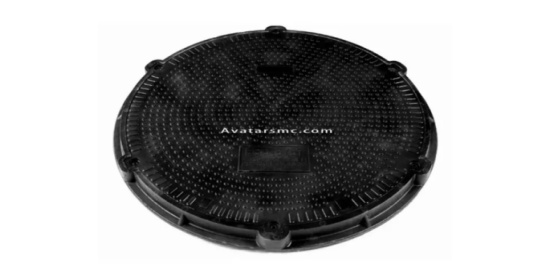
Where FRP Works Best in Urban Infrastructure
Not every urban environment has the same technical demands, which is why versatility matters. One reason a composite manhole cover is increasingly used is that it adapts well to different functional zones.
Common application areas
Roadside utility access
Used for cable trenches, telecom chambers, and inspection points where fast access and lighter handling are helpful.
Drainage and wastewater systems
Useful in moist, chemically aggressive environments where corrosion is a persistent concern.
Commercial and residential developments
Suitable for landscaped areas, pedestrian pathways, and internal utility networks where aesthetics and reduced noise matter.
Industrial and coastal projects
A strong option in environments exposed to chemicals, salt, or continuous humidity.
Design flexibility by project type
FRP covers can often be produced in different dimensions, load classes, colors, and surface finishes. This gives project planners more freedom when matching cover solutions to site-specific requirements.
Cost Should Be Measured Over the Full Lifecycle
A common mistake in infrastructure procurement is evaluating materials only by purchase price. For urban projects, that approach can be misleading. The real question is not just how much a manhole cover costs today, but how much it will cost to install, maintain, replace, and manage over many years.
An FRP Manhole Cover may provide better lifecycle value because it can reduce costs in several ways:
· Lower transportation and handling costs due to reduced weight
· Less maintenance in corrosive or wet environments
· Fewer replacement cycles in demanding conditions
· Reduced theft-related losses compared with metal covers
· Faster routine access for inspection teams
When multiplied across dozens or hundreds of access points in a city project, these operational benefits become significant.
Why More Urban Projects Are Moving Toward FRP
The shift toward FRP is not simply a matter of following a trend. It reflects a broader change in how infrastructure is evaluated. Urban projects now demand materials that support performance, safety, maintenance efficiency, and long-term value at the same time. In many situations, the FRP Manhole Cover answers these requirements more effectively than older material options. It is strong without being unnecessarily heavy, resistant without requiring frequent intervention, and adaptable enough for both functional and visual requirements. From our perspective, this is why more engineers, contractors, and developers are considering FRP as a practical solution rather than a niche alternative.
As a company working closely with composite products, we understand that buyers are usually not searching for a product that sounds impressive on paper; they are looking for a solution that fits real project conditions and continues to perform after installation. That is also why we suggest evaluating suppliers with care and focusing on reliability, material quality, and application fit. For readers who want to explore technical options in more detail, compare specifications, or discuss a suitable FRP Manhole Cover solution for urban infrastructure, it is worth learning more from Avatar Composite co.,Ltd. We believe a careful conversation with an experienced manufacturer can help turn a general product search into a more informed project decision.
FAQ
1. What is the main advantage of an FRP Manhole Cover in urban projects?
The main advantage is its balance of strength, light weight, and corrosion resistance. This makes it easier to handle, more durable in harsh environments, and often more efficient over the product lifecycle.
2. Is an FRP Manhole Cover suitable for areas with frequent rain or wastewater exposure?
Yes. FRP performs well in wet and corrosive environments, which is why it is widely considered for drainage systems, wastewater zones, and coastal or industrial areas.
3. Can FRP manhole covers help reduce theft problems?
In many cases, yes. Because FRP has little or no scrap resale value compared with metal, it is generally less attractive to thieves than cast iron covers.
4. What should buyers check before choosing a composite manhole cover supplier?
Buyers should review product testing, manufacturing consistency, load performance, customization options, and the supplier’s experience with infrastructure applications.


