In infrastructure planning, the choice of a manhole cover is no longer a minor purchasing decision. It affects installation speed, worker safety, long-term maintenance, corrosion performance, theft risk, and even how a site performs in demanding municipal or industrial conditions. That is why more specifiers, contractors, and utility managers are reassessing the long-standing assumption that cast iron is always the default choice. An FRP Manhole Cover offers a different balance of strength, weight, and durability, and in many real-world applications, that balance is proving more practical than traditional cast iron.
The material decision matters more than many buyers expect
For years, cast iron dominated because it was familiar, heavy, and widely accepted in municipal systems. But infrastructure demands have changed. Today, project teams look beyond simple load-bearing capacity and ask broader questions: How easy is the cover to install and remove? Will it corrode in wastewater, coastal air, or chemically aggressive environments? How often will it need replacement? Does it create theft exposure because of resale value? Those questions are exactly where FRP manhole covers have gained attention, especially in utilities, drainage systems, telecom chambers, landscaping projects, industrial plants, and urban access networks.
Another important point is that performance today is judged by standards and application fit, not just by tradition. Load classifications such as A15, B125, C250, D400, E600, and F900 exist so buyers can match the cover to the actual service environment. In other words, the right question is not simply whether cast iron is “strong,” but whether a properly specified FRP cover can meet the required class for the intended location. In many pedestrian, residential, municipal, and even traffic-rated settings, the answer is yes.
Weight changes installation, maintenance, and labor efficiency
One of the clearest reasons FRP manhole covers outperform cast iron is weight. Multiple industry sources describe FRP covers as significantly lighter than metal alternatives, with some citing reductions of up to around 70 percent depending on size and design. That lower weight is not just a convenience feature. It affects transport, site handling, installation speed, inspection access, and worker fatigue. A lighter cover typically needs less lifting effort, fewer handling risks, and less dependence on heavy tools during routine access.
For contractors and maintenance teams, this weight difference can translate into measurable operational value. Easier handling supports faster opening and closing during inspections, lowers the chance of lifting-related injury, and reduces transport costs across larger projects. In practical terms, that means the cover is not only a product choice but also a workflow choice. When systems need regular access, lighter weight becomes a recurring advantage rather than a one-time benefit.
Corrosion resistance is where FRP gains a long-term edge
Cast iron performs well in many environments, but corrosion remains one of its most persistent weaknesses. In areas exposed to moisture, wastewater gases, salts, oils, acids, or chemical runoff, rust and surface degradation can gradually reduce service life and increase maintenance demands. This is especially relevant for municipal drainage, wastewater treatment, coastal infrastructure, and industrial zones.
FRP, by contrast, is widely selected for its non-corrosive nature. Because it does not rust in the same way metal does, it is often a better fit for aggressive environments where long-term exposure is expected.
Strength is not only about mass
A common misconception is that heavier always means stronger. In manhole cover selection, the more accurate view is that strength must be verified through design, reinforcement, manufacturing quality, and compliance with the required load class. FRP covers are engineered composite products, and properly manufactured versions can be designed to meet standardized load requirements for specific use cases. Some industry guidance explicitly notes that FRP covers can pass the same relevant load tests as comparable traditional covers when produced to the correct specification.
Load class matters more than habit
If a cover is going into a pedestrian area, a landscaped zone, a parking area, or a trafficked roadway, the design requirement changes. EN 124 classifications are used to align the cover with the service condition, from lighter pedestrian duty through heavy-duty road and industrial applications. That is why product selection should focus on certified performance for the intended setting, rather than assuming one material is universally best in every scenario.
Better fatigue behavior in demanding environments
Composite materials are also valued for their resistance to many forms of environmental wear, and some suppliers highlight fatigue resistance, impact tolerance, and dimensional stability as part of the appeal of FRP in repetitive service conditions. While the exact result depends on product quality and installation, the broader point is clear: modern composite covers are no longer a lightweight compromise. In many applications, they are a performance-driven alternative.
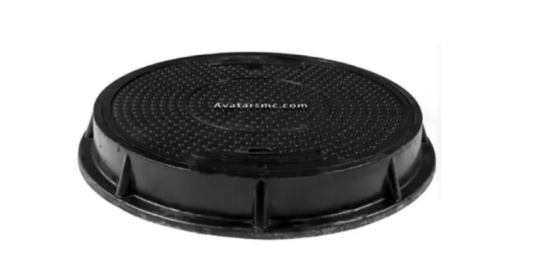
A side-by-side comparison
The table below helps illustrate why many buyers now compare total use value rather than focusing on tradition alone.
Feature | FRP Manhole Cover | Traditional Cast Iron Cover |
Weight | Much lighter, easier to lift and transport | Heavy, more difficult to handle |
Corrosion Resistance | Strong resistance to rust, moisture, and many chemicals | Vulnerable to rust and corrosion over time |
Theft Risk | Low scrap value reduces theft incentive | Higher resale value increases theft risk |
Maintenance | Typically lower routine maintenance needs | May need more attention in corrosive settings |
Installation Efficiency | Faster handling and easier access for crews | Slower handling due to higher weight |
Design Flexibility | Can be produced in multiple sizes, classes, and finishes | Strong but less flexible in practical site handling |
Lifecycle Value | Often lower total cost over time | Can carry higher lifecycle cost in some environments |
The pattern is not that cast iron has no place. In legacy systems and certain heavy-duty specifications, it can still be appropriate. But where corrosion, labor efficiency, safety, and lifecycle cost matter, FRP often becomes the more rational option.
Safety includes more than load capacity
Safety is often discussed in terms of whether a cover can support traffic, but daily operational safety matters just as much. A lighter cover can reduce strain during lifting. A non-corroding surface can help maintain more consistent performance over time. Many FRP products are also designed with anti-slip surfaces or secure fit features to support safer access in wet or frequently opened environments.
There is also the theft issue. Cast iron’s scrap value has made theft a real concern in some markets, creating both replacement costs and public safety risks when covers are removed illegally. Because FRP has little or no scrap resale value, it is often described as a lower-theft-risk solution. For municipalities and utilities, that is not a minor detail; it can directly affect public safety and maintenance planning.
Where FRP manhole covers make the most sense
FRP is especially well suited to applications where environmental exposure and service efficiency matter more than sheer material mass. Typical use cases include:
· wastewater and drainage systems
· telecom and cable access chambers
· coastal and high-humidity installations
· industrial plants with chemical exposure
· landscaped areas, walkways, and public spaces
· parking zones and selected road-rated municipal applications
These are the environments where corrosion resistance, lighter handling, lower theft exposure, and low maintenance tend to create real value over time. FRP is not simply replacing cast iron because it is newer; it is gaining ground because it solves several recurring operational problems at once.
Final thoughts
Traditional cast iron still has a place in some systems, but the market is changing because infrastructure priorities have changed. Today, buyers want covers that are easier to handle, safer to maintain, more resistant to corrosion, less vulnerable to theft, and more efficient across the full service life of the asset. That is where an FRP Manhole Cover often proves to be the stronger overall choice. From our perspective at Avatar Composite Co., Ltd., the most useful recommendation is not to replace cast iron everywhere by default, but to evaluate each project by environment, load class, maintenance frequency, and lifecycle value. When those factors are considered carefully, FRP is often the more forward-looking option. If readers want to explore suitable specifications, compare application scenarios, or understand which load class fits a particular project, they can learn more from Avatar Composite Co., Ltd. or contact the company for practical guidance.
FAQ
1. Are FRP manhole covers suitable for road traffic?
Yes, they can be, provided the product is manufactured for the correct load class. Buyers should match the cover to standards such as EN 124 and choose the class based on the real installation environment rather than assumptions about material alone.
2. Do FRP manhole covers rust like cast iron?
No. One of the main advantages of FRP is that it is highly resistant to corrosion and does not rust in the same way metal covers do, which makes it well suited to wet, coastal, wastewater, and chemical environments.
3. Why are FRP covers considered safer for maintenance crews?
Because they are much lighter than traditional cast iron covers, they are generally easier to lift, transport, and reopen during inspections, which can reduce manual handling strain and improve worksite efficiency.
4. Do FRP manhole covers help reduce theft problems?
In many cases, yes. FRP covers are often described as having little or no scrap resale value, so they are usually less attractive to thieves than cast iron covers.


